
The One-Way Conversation
Cartes Postales from GreeceThis thread traces communication that begins without any expectation of reply and gradually gives way to more direct forms of exchange.
increasing Bearing strength in each event
 decreasing
Bearing strength in each eventdecreasingCards Without a Known Sender

Cards Without a Known Sender
Messages arrive anonymously
Ellie receives postcards signed only with an initial and addressed to someone she does not know. There is no return address, so she cannot identify the sender or send a response.
The images do the speaking
Their brief descriptions communicate enthusiasm and longing rather than detailed information. Ellie pins them up and begins to imagine the relationship implied by their repeated messages.
The cards make communication possible while leaving its central participants absent from each other.
A Postcard After Abandonment

A Postcard After Abandonment
Writing without expecting an answer
Anthony buys a postcard after Sarah fails to meet him. He writes because a one-way message feels preferable to silence, not because he expects a reply.
Communication preserves a link
The card lets him imagine speaking to Sarah while admitting that he is travelling alone. Sending it becomes a small action that makes movement possible.
The same form later reaches Ellie by mistake, connecting two lives through an absent addressee.
Stories as Address

Stories as Address
A reader imagined
Anthony tells himself the notebook’s stories are for Sarah. The intended audience lets him organize his observations as if he were still in conversation with her.
Writing for the writer
He eventually recognizes that he writes partly for himself. The notebook holds what he has heard and what he cannot otherwise say.
The private audience is useful even when the relationship that gave it meaning has ended.
The Intended Recipient Named

The Intended Recipient Named
A hidden identity surfaces
Anthony asks whether something has happened to Sarah. Ellie learns the full name behind the initial S. Ibbotson, although she still knows little about the woman.
The address proves unreliable
Anthony realizes Sarah never lived at Ellie’s address. The postcards and notebook were sent toward a life that may never have existed as he imagined it.
Naming the recipient does not repair the failed communication, but it allows Anthony to discuss it directly with another person.
Conversation Replaces the Postcard
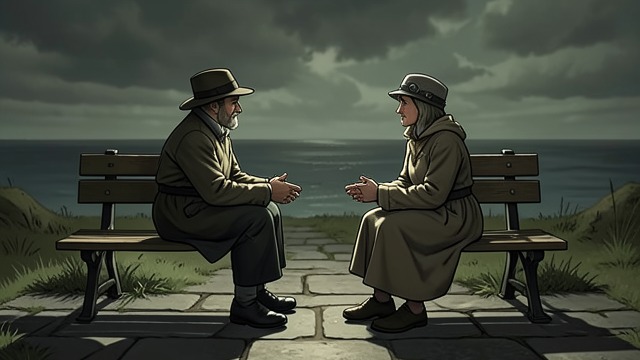
Conversation Replaces the Postcard
A direct exchange begins
Ellie and Anthony talk about his past, her work, and their plans. Neither has to rely on an imagined audience or a message that may never arrive.
A practical response follows
Anthony offers work and accommodation; Ellie makes a decision and tells the group she will stay. The exchange produces a real next step instead of a hope sent into the post.
The novel shifts from one-way communication to reciprocal listening and shared possibility.
Late December, before Ellie’s holiday
October 2015, after Anthony leaves Methoni
The months Anthony travels in Greece
Ellie’s first afternoon with Anthony
The final evening on Ellie’s scheduled holiday
